
Fashion Design Portfolio Guide: Layout, Ideas and Best Practices
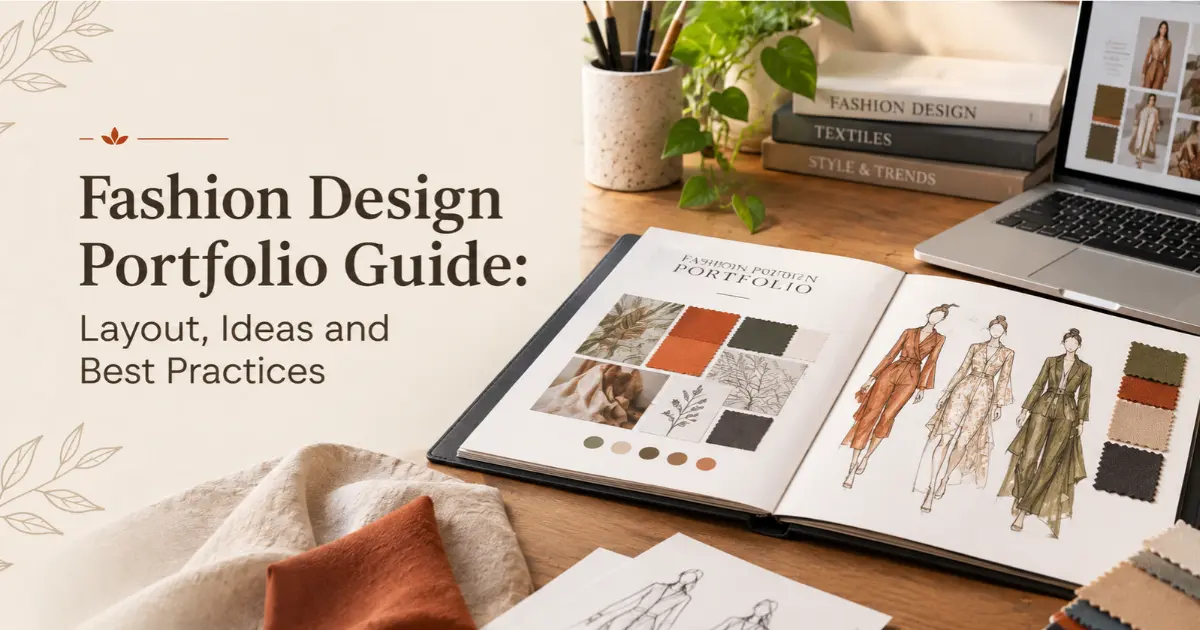
A well-designed fashion portfolio showcases the very best of the designer’s work in a visual narrative form. A fashion designer's portfolio contains sketches, concepts, fabric exploration, development and finished garments. This fashion design portfolio guide explains what to include, how to organise it and how designers can showcase their work via a digital portfolio.
What Is a Fashion Design Portfolio?
A fashion design portfolio represents a well-selected collection of works of a fashion designer. It demonstrates what you can create and how you develop an idea into a finished design. Your fashion design portfolio may contain drawings, concepts, materials, experiments and completed projects. A portfolio is not just a simple collection of images. It is the visual representation of your skills and creativity.
Key Elements of a Fashion Design Portfolio
Fashion sketches and illustrations
Fashion illustration is used to express how the idea will look on the figure before turning it into a garment. Be sure to include sketches that will showcase your silhouette, proportions, details and styling. Choose those that reflect your skills and design philosophy.
Mood boards and concept development
The purpose of the mood board is to express the visual inspiration behind the fashion design idea. This combines pictures, colours, textures, references, and keywords. You should explain how these elements support the design concept instead of adding unrelated images simply to fill space.
Fabric and textile exploration
The choice of textiles affects the appearance and movement of the garment. Show fabric samples or textile experimentation if they are relevant to the project. Give brief descriptions of fabric choices and how the chosen fabric relates to the design.
Garment development
Garment design develops from an initial idea into a practical piece. Demonstrate changes to the design during the development phase. This could include silhouette changes, design details, or choices of materials. This helps show how your early idea became a more considered design.
Finished designs or collections
Finished designs show how your ideas fit together. Showcase finished clothing pieces or a collection of fashion designs with coherent images and detailed descriptions. Choose designs that truly reflect your skills and not just everything you've designed.
Design process
The design process is a description of how the final result came about. Illustrate a selection of steps from research to inspiration, development, and finally the design process. This gives context to your work and helps express the creative decisions behind each project.
Fashion Design Portfolio Layout Ideas
Collection-based layout
The collection-based layout includes designs in the same category in a single portfolio. This will suit the situation where several designs have been created. Begin with the concept, then follow with development, designs and finishing touches.
Project-based layout
The project-based layout involves creating a separate portfolio for each major project. This will be appropriate for beginners who have various kinds of projects. Each portfolio may include concept, research, development and final outcome.
Process-based layout
Process-based layout concentrates on the evolution of an idea from start to finish. Begin with design inspiration and concept research, then show sketches, experiments, development and the final outcome. It is especially effective in showing the process of creativity.
Minimal portfolio layout
A minimalist layout allows the visuals in the portfolio to stand out the most. Use strong images, short explanations and enough empty space to keep pages easy to understand. This fashion portfolio design approach is useful when the work itself is visually strong.
How to Choose Designs for Your Portfolio
Select strongest work
Choose pieces that best showcase your skills. The quality of your designs is more important than the amount you have completed. A limited number of well-presented projects will generally make a greater impression than an extensive number of incomplete or redundant designs.
Show variety
Use varying methods, shapes, materials or other forms of creativity to demonstrate your abilities when they reflect your range of skills. You can use variety to showcase your abilities, but each project must be related to your design vision.
Include complete projects
Complete projects give the audience enough information to understand your thought process. Whenever possible, present the entire project from concept to finished piece. Doing so creates a better story than just presenting the sketch without any further explanation.
Eliminate repetitive work
Eliminate any projects that repeat the same idea or skill more than once. Repetition adds length to your portfolio, but not strength. Choose the projects that demonstrate something distinctive about your abilities, process or visual language.
Fashion Design Portfolio Best Practices
Use high-quality images
Good images make your work easier to evaluate. Make sure to take high-quality images or scan designs and that there are no background distractions and all details remain clear. The presentation will have an impact on how easily people can see the design.
Write useful descriptions
Make sure to provide a relevant description for each design without making the description too long. Describe the design concept, inspiration, materials used or any other relevant decisions made. Do not fill the description with generic descriptions.
Keep it updated
As you develop as a fashion designer, your portfolio should be updated regularly. An updated portfolio presents your current skills rather than only your earliest experiments.
Building Your Digital Fashion Design Portfolio with Studio Tokri
Step 1: Provide Your Basic Details
Fill out the Studio Tokri onboarding form with basic information, including your name, age, date of birth, email address, address and phone number. These details help us collect the information needed for your designer onboarding.
Step 2: Select Your Designer Category
Choose the category that best represents your work. Studio Tokri currently includes categories such as:
Clothes
Bags
Accessories
Gifts
Others
Selecting the appropriate category helps identify the type of designs you create and present your work within the relevant designer category.
Step 3: Tell Us About Yourself and Your Work
Use the introduction section to explain who you are as a designer and what you create. You can share relevant information about your creative interests, design experience, style and the type of work you want to showcase.
Step 4: Upload Your Designs
Upload your design work through the onboarding form. Studio Tokri currently allows designers to upload up to 10 supported files with a maximum size of 10 MB per file. Select work that represents your skills, creativity and design direction.
Step 5: Showcase and Sell Your Designs
Studio Tokri is built specifically for designers who want to showcase their work and create opportunities around their designs. The platform allows designers to sell their designs without commission, giving creators a way to present their work and explore commercial opportunities while building their presence.
Ready to Turn Your Designs Into a Digital Portfolio and Sell Online?
Studio Tokri is a designer-first marketplace that enables you to build your very own digital portfolio, showcase your work and sell your designs without any commissions. Rather than storing your designs on different social networking sites, or even keeping them in files, designers can create their online portfolio through one platform.
Read more:
How to Sell Clothes Online in India: An Ultimate Guide for Fashion Designers
Conclusion
An ideal fashion design portfolio does not necessarily contain only images, but rather a well-selected selection of designs. You should select your best work, give a brief explanation of the process used to develop the designs and organise the projects. Beginners can start with existing work and gradually improve their portfolio as they create new designs and gain experience.