
Types of Fabric: 15 Fabrics Every Fashion Designer Should Know
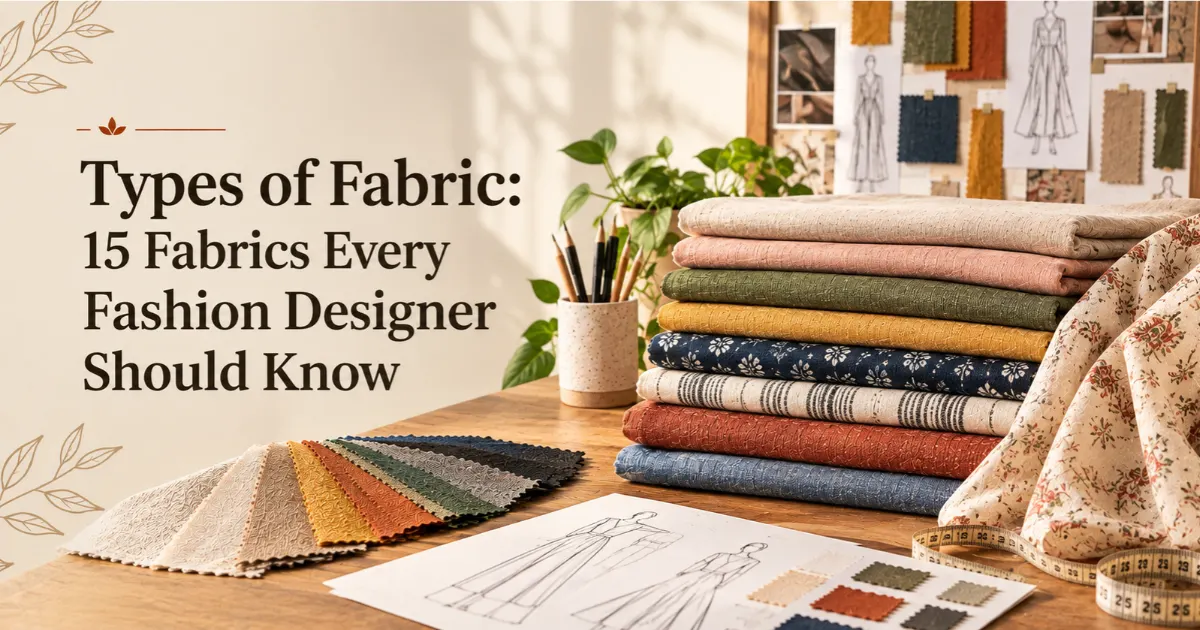
Choosing the right fabric can completely change how your garment looks, feels and fits. A design that looks beautiful on paper might not work the same way when made in a stiff fabric, while a simple design can look elegant when paired with the right material.
That is the only reason why understanding the types of fabric is one of the basics every fashion designer needs to get right.
Fabric affects everything from drape and comfort to durability, structure and movement. There are many different types; some come from natural fibres like cotton, linen and wool, while others are made from manufactured fibres like polyester, nylon and spandex.
Then there are fabrics like denim, velvet, satin and chiffon, which are known for their particular texture and appearance.
Cotton
Cotton is one of the most common types of fabrics used for clothing. It is made from natural fibres and is known for being soft, breathable and comfortable against your skin. It works really well for everyday clothing like shirts, dresses, kurtas, skirts and casual trousers. Depending on the weave and finish, cotton can be lightweight or fairly structured.
Linen
Linen is another practical fabric that is popular for warm weather. It is made from flax fibres and has a natural crisp look. One thing the designers should remember about linen is that it wrinkles easily. For some styles, that relaxed texture is part of the appeal. Linen works beautifully for loose shirts, summer dresses and trousers.
Wool
Wool is a warm natural fibre generally associated with colder weather. It can come in different weights and textures, making it suitable for everything from lightweight clothing to heavy winter clothes. It has good insulating properties, which is why it is generally used for coats, jackets, sweaters and suits.
Silk
Silk is valued for its smooth texture, natural sheen, and beautiful drape. It can even make a relatively simple garment look dressier. Depending on the type of silk, it can be lightweight and fluid or even more substantial. You can use it for blouses, dresses and evening wear.
Polyester
Polyester is one of the most widely used synthetics. It is durable and is likely to resist wrinkles better than many natural fabrics. It is used across everyday fashion, sportswear, dresses, jackets and uniforms.
Velvet
Velvet is easy to recognise because of its soft raised surface and rich appearance. It has a luxurious look and is often associated with evening and festive clothing. Because velvet has a noticeable pile, designers need to consider the direction of the fabric before cutting and stitching garments.
Denim
Denim is a strong cotton fabric generally made using a twill weave. While blue jeans are the first thing that you will associate with denim, it is also used beyond that. Today you can see denim jackets, skirts, dresses, jumpsuits and even structured fashion pieces.
Chiffon
Chiffon is a lightweight, sheer fabric with a soft, flowing look. It is often used when a designer wants movement rather than structure. Because it is delicate to handle, cutting and sewing chiffon requires a lot of care it is popular for dresses and even evening wear.
Satin
Satin is known for its smooth appearance and glossy appearance. It has a luxurious texture and is frequently used for occasion wear and lingerie. Satin can be made from different fibres, so the characteristics can vary from one satin fabric to another. You need to look at the fibre content and the surface finishing when choosing it.
Rayon
Rayon is a manufactured fibre made from regenerated cellulose. It is often known for its soft feel and fluid drape. It can resemble the look and feel of some natural fabrics while generally costing less. You can generally find rayon in dresses, skirts, trousers and casual clothing.
Leather
Leather is different from most fabrics on this list because it is made from animal hide rather than spun fibres. It is strong, durable and has a unique appearance that changes with use. You can use leather for jackets, trousers, skirts, shoes, belts and other accessories. There are also synthetic alternatives if you are looking for a non-animal option.
Nylon
Nylon is a synthetic fibre known for its strength and resistance to abrasion. You can generally use it where durability and flexibility are important. You can find nylon in activewear, outerwear, swimwear, stockings and performance clothing. It is also frequently blended with other fibres.
Spandex
Spandex is also known as elastane and it is best known for exceptional stretch. It is rarely used alone and is usually blended with fibres like cotton, polyester or nylon. Even a small percentage of spandex can give your clothing more flexibility and help it fit closely to your body. This makes it especially useful for activewear and fitted garments.
Bamboo
Bamboo fabric is made from bamboo-based cellulose and is often marketed for its soft feel and lightweight nature. Depending on the manufacturing process, bamboo textiles can have characteristics similar to rayon.
Hemp
Hemp is a natural fibre known for its strength and durability. It has a slightly textured appearance and can become softer with use and washing. You can find hemp fabric in shirts, trousers, dresses, jackets, bags, and home textiles. It can also be blended with fibres like cotton to create a softer hand feel.
Natural vs. Synthetic Fibres
Natural Fabrics
Synthetic or Manufactured Fabrics
Cotton
Polyester
Linen
Nylon
Wool
Spandex
Silk
Some types of rayon
Hemp
Many synthetic blends
Read more:
Types of Fashion Designers and Their Role in the Fashion Industry
Fashion Design Portfolio Guide: Layout, Ideas and Best Practices
Conclusion
There is no single best fabric. The right choice depends on the garment, season and look you want to create. Understanding these types of fabrics gives you a strong starting point. Once you know how cotton weaves are compared with linen or why spandex is added to stretch garments, choosing fabric becomes much simpler. And that knowledge really matters. A good design is not just about the sketch; it is also about choosing a fabric that allows the sketch to work in real life.