
What is Handcrafted? Meaning, Value and Types of Handicrafts
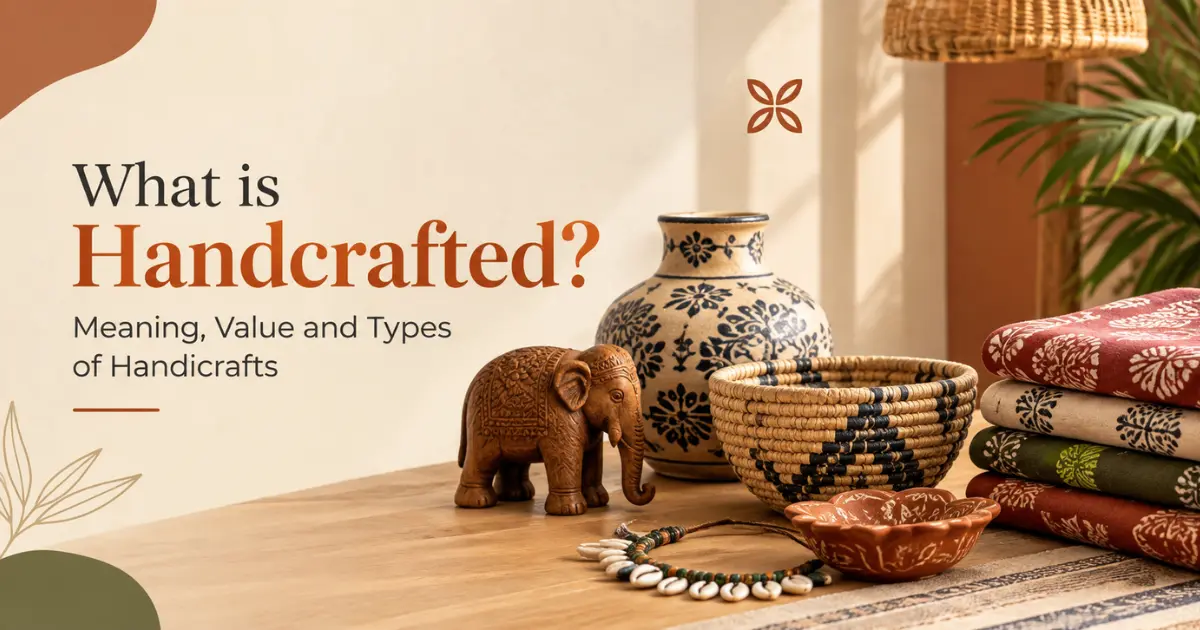
Have you ever seen something and immediately thought, “This doesn’t look mass-produced”?
Maybe it was a hand-painted piece of decor, a beautifully embroidered outfit or just a pair of earrings. You might not always know how it was made but you somehow tell that someone has spent time and skill creating it. That is part of the appeal of handcrafted products.
Today we can buy almost anything within a few clicks. There are thousands of products available in the same colour or design. So when you come across something that feels a little different it catches your attention naturally.
What does handcraft actually mean?
In simple terms, handcrafted means something that has been made with human skill and creativity. It does not mean an artisan has made every single part of a product completely by hand. Depending on the craft they might use tools or looms. What matters is that the maker's skill plays a very important role in creating the final product. Think about a beautiful embroidered outfit. The fabric might be machine-made, but the embroidery could be carefully done by a designer.
Or take a piece of jewellery. Some components might be sourced separately while the design, shaping and assembling might be done by hand. This is why the term handmade focuses mainly on how a product is made. It tells you that there is a person behind the product, someone who has made choices, worked with the materials and applied their own skill to the process.
Why do people love handcrafted products?
There is something nice about owning something that does not feel like it came straight from a huge production line. Handcrafted products often have little differences. One piece might have a slightly different pattern; another might have a small variation in texture. And that's completely ok. In fact, those little differences can be what make a product beautiful.
When everything around you can be copied and produced in large numbers, a product with its own character feels more personal. There's a story behind many handcrafted products. You may find yourself thinking about the person who created the piece, the techniques they used and the story behind their work.
Where did handcrafting begin?
Handcrafting is not a new trend; people have been making useful and decorative objects by hand for thousands of years. Before modern factories existed, many people relied on themselves or local craftspeople to make the things they needed.
Clay was shaped into pots, fibres were woven into baskets and wood was turned into tools and furniture. Over time people became better at these skills and started passing them from one generation to another. As a result, many different craft traditions developed across regions and communities.
India has a particularly rich history of craftsmanship. Different communities and regions developed their own techniques and styles. This is one of the reasons Indian crafts are so diverse. The craft traditions found in one part of India can look completely different from those found elsewhere. Some regions are known for textiles, while others are known for embroidery, pottery and other traditional crafts.
Why are handcrafted products valuable?
When you look at a handcrafted product it's easy to focus only on how it looks. But there is usually much more behind it. A craftsman might have spent years learning a particular technique. They know how to work with different materials, such as fabric, metal or clay, using techniques developed through years of practice.
That kind of knowledge takes time. Then comes the actual work. Depending on the product, an artisan might spend hours selecting materials, creating a design, and shaping, stitching or finishing the piece.
So the value is not only in the materials used. It also comes from the time, skill and effort that go into making the piece. There is also cultural value. Many traditional handicrafts are connected to specific communities and have been passed down through generations.
What can be handcrafted?
The answer is quite simple. When you hear the word handcrafted you might immediately think of pottery or traditional decor. But the range of handcrafted products is much broader than that.
You can find handcrafted:
● Clothing
● Jewellery
● Bags
● Scarves and accessories
● Home décor
● Paintings
● Pottery
● Ceramics
● Wooden products
● Metalwork
● Embroidery
● Handwoven fabrics
● Baskets
● Sculptures
● Handcrafted gift items
Different types of handcrafted products
Handcrafted clothing
Handcrafted clothing can involve extensive handwork, especially when artisans use techniques such as embroidery, weaving or embellishment. Modern designers are also finding interesting ways to combine these techniques with contemporary styles.
Handcrafted jewellery
Jewellery can involve several stages of handwork from shaping and assembling materials to adding details and polishing the final piece. These techniques can give handcrafted jewellery a distinctive look and character.
Handcrafted home decor
Examples include wall art, sculptures, mirrors, pottery and decorative boxes, all of which can add personality to a room. Instead of having the same decor as everyone else, handcrafted pieces can give your home a more individual feel.
Textile crafts
Weaving, embroidery, knitting and hand-printing are all examples of textile-based crafts. India has a huge variety of textile traditions with different regions known for their own techniques and designs.
Handmade vs handcrafted: are they different?
This is a question you might often have. The two terms are very similar and you will often see them used interchangeably. But there can be a small difference in what they emphasise. Handmade usually means that a person has made or assembled the product by hand.
Handcrafted often emphasises the skill, craftsmanship and techniques involved in creating the product. For example, imagine someone making a necklace by assembling beads and chains themselves. If they assemble the necklace themselves, it can be described as handmade.
Conclusion
At the end of the day, handcrafted is about much more than simply making something by hand. It's about their skill, creativity, time and the choices they make throughout the creative process. And that's why handcrafted products can feel so distinctive. Handcrafted bags and jewellery pieces may not look exactly alike, and that's part of their charm.
Explore Studio Tokri and discover handcrafted creations made by independent Indian designers and makers across India.
Registration Open for Designers: Register Now!